Showing posts with label Documentary. Show all posts

Friday, 18 April 2014

Lawrence of Belgravia (2011) - Paul Kelly


Okay so the briefest of history lessons first. Despite what you might have read, heard or remembered the eighties was actually a phenomenal period for music. Back then Lawrence had a band called Felt. They were influential, heavenly, and easily one of the best bands of that era. Lawrence’s plan was to release ten albums and ten singles during the eighties and then split the band. Which is basically what happened. Lawrence desperately wanted to be a star, play Top of the Pops, sell a ton of records and live the whirlwind life of the fabulous. His records sounded like nothing else around at the time, the guitar heroics of Television fed through The Velvets swagger and topped off with a healthy dose existential poetry. Lawrence was ready for stardom, he sang about it, craved it, demanded it, but it never came. Felt were, and I suppose still are a cult band.

Paul Kelly’s remarkable documentary, Lawrence of Belgravia, picks up Lawrence’s story twenty years after Felt’s demise. Things aren’t too good for Lawrence when we catch up with him, he’s facing eviction and is suffering from mental health issues. That said he’s still recording and releasing music as Go-Kart Mozart, and dressing like a thrift store Brian Jones at his most dandyish. Still living the dream, still clinging to the vague hope that at any moment his boat will come in. Through a series of interviews with various interviewers, we get to meet Lawrence the person as opposed to Lawrence the failed pop star. All sorts of topics are covered from the formation of Felt right through to Lawrence’s opinions on the internet. Lawrence is an entertaining interviewee, coming across as someone who could wax lyrical and say something pithy about almost any subject dropped in front of him. One of the things that impressed me most about this documentary was that at no time is Lawrence ever made a figure of fun, you never get the feeling that anyone involved in the film is laughing at him in any way. It is funny, in places hilariously so, but the amusement always comes from Lawrence himself. One scene in particular of him trying to paint a door is painfully comical.

I’ve been trying to see this documentary for years, and have only just managed to do so. Being a huge Felt (and Lawrence) fan, I was worried that I’d built up what could have been unattainable expectations. Yet Lawrence of Belgravia didn’t disappoint. The whole documentary looks gorgeous, and is largely comprised of static shots, allowing the action to unfold within the frame. Which works well and allows Kelly’s great eye for composition to really come to the fore. Kelly’s background in photography is something that really shines through in his films. He's also aces at super-fast montage sequences, one of which manages to compress the whole history of Felt into a few seconds of screen time. Very nice.

The great thing is that you don’t have to be a fan of Felt, or even music to enjoy this, since it’s a portrait of a rather eccentric individual, who when given a platform tends to make amusing comments about everything. Please, someone just give him a TV show.

Lawrence of Belgravia is thoroughly watchable and for a Felt fan like myself an utter joy. For the eagle-eyed, there are some sublime cameos (my personal favourite being Pete Wiggs popping up for a second behind a door), Pete Astor, Martin Duffy and even legendary producer John A. Rivers turn up at various points. If you get the chance to catch a screening of this, then you’d be a fool to miss it. Hunt it down, you won’t regret it.

Monday, 6 January 2014

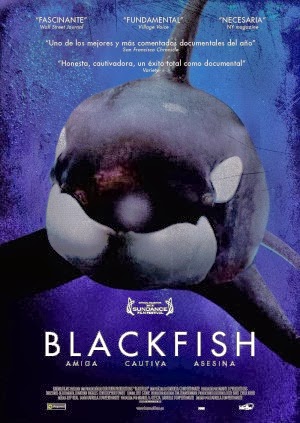
Blackfish (2013) - Gabriela Cowperthwaite


Okay so first up I should say that I’m a vegetarian and have been since about the age of sixteen. So that’s about twenty five years now. Also I don’t like zoos or the idea of wild animals being held in captivity for any reason other than their own safety. One last thing, I abhor the idea of animals being used for entertainment or to make money. Okay so with all that out in the open I think it’s fair to say that I brought a healthy amount of baggage with me when I watched this documentary. Probably enough to ensure that I’d have to pay a surcharge to get it all on the plane.

So what’s Blackfish all about? Well the long and short of it is this. Tilikum is a killer whale who ‘works’ at SeaWorld in Florida. You know what SeaWorld is, it’s one of those places where hordes of people pay money to see dolphins and other marine life jumping out of the water and performing tricks for them. After which you can head off to the restaurant to spend some money, before buying some cuddly toys on your way out. Problem is Tilikum has been killing his trainers and has so far notched up three kills. SeaWorld just like any good capitalist, fudges the evidence and manages to convince the outside world that it’s not Tilikum but the trainers that were at fault. After all you gotta keep those people flowing through the gates, and those dollars in the till haven’t you? And that’s mighty hard to do if your public think that the star attraction is a serial killer.

So anyway that’s the skinny. The documentary itself is very one sided purely because SeaWorld refused to be interviewed or give any kind of statement about what has happened. So instead it focuses on asking why is it that killer whales in captivity have a staggeringly huge record of injuring and in some cases killing humans, when in the wild that sort of thing never happens? Unlike a lot of documentaries Blackfish actually manages to get to the bottom of this mystery with surprising ease. In fact to be honest, I kind of knew the answer going in myself. It’s the exact same reason why Roy Horn (of Siegfried & Roy fame) was attacked by one of his tigers, and the same reason why Timothy Treadwell was ripped apart by the bears that he loved so much. These are wild animals, and as such are unpredictable, once you forget that and start treating them as your pets then all is lost. It’s just a question of time before they snap and decide that they’ve had enough of having some leather-skinned chappie sticking his head into their mouth, or having someone on their back as they swim around a tiny pool. And who can blame them?

Director Gabriela Cowperthwaite has fashioned a superb documentary out of some great talking heads footage (ex SeaWorld employees and killer whale experts), and some utterly gruesome home video footage of the whales flipping out. You’ll have to have a heart of stone not to be moved by it. I think most people will watch it through a permeant stream of tears. The film it shares a lot of themes with is 12 Years A Slave, mothers being forcefully separated from their children the idea of a living being being little more than property etcetera. As I said there will be tears. I’ve always hoped that in a few generations time they’ll look back at our era and think, “Really they kept animals in cages, what were they thinking?” Hopefully this documentary will make a few more people think about what to do on their family day out, and head for the beach, or the woods, or the fun fair or whatever, just as long as it’s not to a zoo or marine park. Well worth seeing.

Sunday, 15 September 2013

Thursday's Children (1954) - Lindsay Anderson


Along with most Brits of a certain age I have a special place in my heart for Lindsay Anderson. Film critic, director, and most importantly of all the individual that gave British film a much needed kick up the arse back in the mid 50s as the founding father of the Free Cinema movement. He didn’t make all that many films, but when he did they were always, always, worth seeing. However, as much as I adore If...., This Sporting Life and Britannia Hospital, it’s his documentary shorts O Dreamland and Thursday’s Children that I return to time and time again. Both were shot in the British seaside town of Margate, and have a pull on me that I can’t really explain.

The better of the two is Thursday’s Children, which is about a school for deaf children. Every time I watch it (which is at least once a year), I cry. A lot. Narrated by Richard Burton using his best earthy brown vocals and lensed by the legendary Walter Lassally, it packs a lot into it’s brief 25 minute running time. We get to meet various children and two of their teachers. We see how they learn to form sounds and words, slowly. Very slowly.

It’s a painful watch, since as the documentary unfolds you can't help but wonder what is going to become of these poor kids? What does the future hold for them? Remember this is 1950s Britain, so any real sort of understanding of their disability from the general public is going to be a hard won battle. It’s heartbreaking to think about. The kids in the film are so happy and full of life, so much so that I can’t help thinking that once they leave school (where they live too), that their happiness will be quickly knocked out of them by the harshness of the outside world.

Back in the mid 80s, my junior school had a deaf unit. None of the children from that deaf unit were accepted by the other kids in the school, they were treated as outcasts and mainly used as a punchline for many cruel jokes. I got to know one of the kids, Robert. He was a sweet guy who lived down the road from my nan. Maybe it’s this memory that makes Thursday’s Children such an emotional watch for me?

Thursday’s Children picked up the Oscar for Best Documentary (Short Subject) at the 1954 Academy Awards. Which is neither here nor there really, but it does show that it had appeal outside of Great Britain, and probably allowed it to reach a far greater audience than a film like this should have any hope of finding. Whenever I watch it I can’t help but wonder what happened to all the kids? How did their lives turn out? How are Dennis, Linda or Katherine doing? I’ll never find out, I know that, but it never stops me from wondering. If you’ve never seen this, then you really should. It’s even on YouTube, so there’s no excuse. Just be ready to shed some tears.

Friday, 30 August 2013

Marley (2012) - Kevin Macdonald


Kevin Macdonald knows a thing or two about how to put together a decent documentary. After all he’s the guy responsible for both One Day in September and Touching the Void, two of the best documentaries of recent times. So when it was announced that Macdonald was taking over production of the documentary about the life and times of Nesta Robert Marley from Martin Scorsese, (who like both Spielberg and Del Toro, always seems to be attached to more films than is humanly possible to make), I knew that sooner rather than later I’d end up owning it.

Now I love a good music doc as much as the next man, especially when I don’t really know all that much about the subject. Which is just what Marley is for me. What I knew about Bob Marley were just the basics that everyone knows, those fantastic early Ska 7”s, the early Lee Perry produced stuff (Mr Brown being one of my all time favourite songs) and that after he signed to Island his music became watered down, but crossed over and sold like the preverbal hot cakes to the white folks. Oh and he died because of some injury sustained whilst playing footie. Beyond that I didn’t have the foggiest.

Macdonald’s documentary really wins out by concentrating on Marley the person, rather than being a definitive trawl through which album came when and what single charted where. I’m sure there are numerous books out there that cover that sort of thing in OCD style detail. The Marley family seem to have given their blessing to the project since they are interviewed, and have obviously given up a stack of never before seen pics and home video footage. Now normally that sort of thing could be a death blow for this sort of film. Since the director is obligated to show the subject in a certain rose tinted light in exchange for access to such previously unseen goodies. However Macdonald manages to have both his cake and eat it. For every story of Bob Marley bringing people together there is another about him shagging his way around the globe, or being a shitty parent. Eleven kids by seven different women while all the while being married, that definitely paints a picture that most families wouldn’t want talked about too loudly.

On top of that the interviews that Macdonald secures with various players from the late 60s Jamaican reggae scene are all gold. Jimmy Cliff, Bunny Wailer, Chris Blackwell and Rita Marley are all very forthcoming. Lee Perry is thankfully not in crazy man mode and manages to give a small insight too. Although his contribution is so small I do suspect the rest of his interview was unusable. Fire, water, CDs hanging from bits of string on a stick, his standard routine. Yawn. Then there are various girlfriends, long lost family members and a whole host of characters from Marley’s past. Weaved into these interviews are some gorgeous aerial photography of Jamaica and archive footage galore.

In short this is one of those documentaries that if you have any sort of love of music you have to see. I went into it thinking Bob Marley was an alright if somewhat overrated bloke, that managed to bring reggae to the sort of people that would never normally listen to it. I came away not having changed my opinion all that much, but with a greater respect for the man. The final chapter of the film, dealing with Marley’s untimely death is heartbreaking, and really hammers home the idea that behind the persona Marley had built for himself throughout the 70s, was a very real person who was dying and desperately didn’t want to. See it with the bass cranked up to max, but do see it.

Thursday, 16 May 2013

What Have You Done Today Mervyn Day? (2005) - Paul Kelly


Paul Kelly’s second foray into the world of film making is this wonderful short (45 minutes) film about the Lower Lea Valley in London’s East End. The announcement on 6th July 2005 that this long neglected area was soon to become the center of the worlds attention (due to it being transformed beyond all recognition into the Olympic Park for the 2012 London Olympics), was met with a smattering of applause and a healthy dose of scepticism from the local population. Luckily Paul Kelly was on hand along with long time friends and collaborators Saint Etienne to capture the area on film before it disappeared forever.

We follow a paperboy as he cycles through the various places that make up his route. It’s a simple narrative that allows Kelly to focus on a number of seemingly unconnected images and places that appear to have been forgotten by all but those that live there. Mervyn Day (the paperboy) meanders around the downtrodden area exploring derelict buildings, cricket grounds and canals. On top of this we get various audio bursts from the locals, waxing lyrical about everything from a crocodile that lives in the canal, Dick Turpin and a kidnapper on the loose. There's also wonderful gravelly narration from David Essex and Linda Robson as Mervyn's grandfather and mother respectively.

What Have You Done Today Mervyn Day? works in the same way as The London Nobody Knows or even The Long Good Friday in that it records a whole swathe of London that has now gone for good. A time capsule for a future generation if you will. There's references to The Smiths, Eastenders (signs for both The Dagmar and The Queen Victoria turn up), stories about great leaps in industry (plastic being invented here) and how nicking toy cars from the Matchbox factory wasn’t really thought of as stealing. More than anything there is a strong feeling of nostalgia running through the film. This comes across not only in the audio interviews, but also in Saint Etienne's score.

Peppered throughout What Have You Done Today Mervyn Day? are snippets of radio news about Britain winning the Olympic bid and of the bombings that knocked London for six the day after that announcement. Which cleverly manages to convey both the mixed feelings (excitement & gloom) that was in the air at the time. It also firmly anchors the film in a particular moment in time. It might not mean much now, but in 50 years…

Coming from a photography background Kelly has a keen eye for where to place his camera and manages to find beauty in things that most people would normally look away from. An old Coke can and half deflated football sitting atop a puddle of scum on a waterway, rows of long abandoned industrial premises, old street signs and heavily graffitied walls. All look interesting and invoke a nostalgia for ‘the old days’. I found a shot of an old bin with wooden slats particularly moving. Maybe you had to be there.

Just as with their previous collaberation with Paul Kelly, 2003's Finisterre, the Saint Etienne soundtrack works a treat. The music itself is almost an updated version of John Cameron’s aces score for Kes. Very pastural yet modern at the same time, very Saint Etienne in other words. It's all flutes and beats, the sound of the past and the present clashing with great success. They performed it live at the film's premiere at London’s Barbican Centre.

By the film's end our paperboy is down at the Thames staring across the water at that other huge London redevelopment project of the recent past - The Millennium Dome. It leaves the viewer questioning what will happen to the communities around the Lower Lea Valley in the aftermath of the Olympics? Will they be pushed further afield and not get to enjoy the rejuvenation of their own area? After all, that has been happening for donkey's years now with the gradual 'gentrification' of London. Time alone will tell. Once the lovely animated credits for What Have You Done Today Mervyn Day? start to role though you’ll find yourself wanting to go for a stroll along the waterways, or maybe pop into one of the local caffs for a mug of tea. It’s too late though since it’s all gone now. That’s why this film is so important. A total triumph.

Wednesday, 8 May 2013

Henri-Georges Clouzot's Inferno (2009) - Serge Bromberg & Ruxandra Medrea


Utterly absorbing documentary about genius French director Henri-Georges Clouzot's unfinished film - Inferno. Clouzot already had a few great films under his belt (Les diaboliques, Le salaire de la peur and Le corbeau) by the time he started work on Inferno in 1964. Marcel (Serge Reggiani) and Odette (Romy Schneider) are a couple who run a lakefront hotel in rural France. Marcel is insanely jealous of Odette and er, that’s about it since after three weeks of filming everything went pear shaped and ground to a halt.

What directors Serge Bromberg & Ruxandra Medrea have achieved with their documentary is nothing short of a miracle. First they managed to track down all the film that was shot for Inferno, including screen tests, camera tests and all that sort of thing. Next they convinced Clouzot’s widow to allow them to use that footage in their documentary. Their real ace in the hole though is showing whole chunks of the film cut together with sparse sound effects and actors reading the original dialogue, since the original footage didn’t contain a soundtrack. So rather than just talking about one of cinema’s great lost films with perhaps a few tantalizing stills, we actually get to see roughly what it is we lost out on.

Inferno looks nothing short of stunning, the bulk of it is black & white, but at key moments the footage shifts to really vivid colour. Plus from what's on show here Inferno would have ended up being as trippy as the Stargate sequence in 2001. Lighting set ups that move in a circular motion around the face, lots of mirrors and strange filters. Faces being imposed over one another and at one point a wall of eyes. As I said trippy.

So what went wrong? Well first up Clouzot was a hard person to work for. He was famously cruel to his first wife (Véra) during the making of The Wages of Fear (which she starred in), and I’ve hardly ever heard anyone say he was a joy to work with. So there’s that. Serge Reggiani was a big star back then and walked off of the shoot after three weeks of being screamed at, and being forced to run after a camera car for days on end in the searing heat. So there’s that too. Then there’s the fact that Clouzot was a perfectionist, reshooting scenes that were already deemed perfect by everyone else. Despite the fact that the lake they were shooting around was scheduled to be drained within four weeks. So there was a time factor in there too. The final nail in the coffin came when Clouzot suffered a non fatal heart attack. Effectively calling a halt to the whole shebang.

The saddest thing about this documentary is that we will never get to see the finished film. Unlike other films that were butchered on release but have since been restored to the original glory (The Wicker Man, Metropolis and The Wild Bunch for instance), this documentary is as good as it gets. Bromberg & Medrea score points for getting key people that worked on the film to tell their stories, including Costa-Gavras no less. Now if Peter Bogdanovich could just sort out a decent version of Orson Welles’ unfinished The Other Side of the Wind then everything really would be hunky dory.

Saturday, 27 April 2013

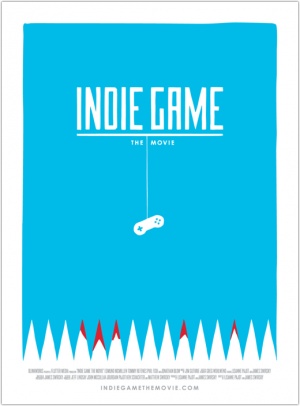
Indie Game: The Movie (2012) - Lisanne Pajot & James Swirsky


Kickstarter funded documentary about the world of independent game developers. Right from the off I have to say that I thought this was an extremely absorbing watch, for a start I’m not a gamer, it’s not that I don’t enjoy playing them it’s just that I find they tend to suck the hours out of life like nothing else on earth. There’s heroin addiction and just a little lower down the ladder there’s game addiction. I just don’t need either in my life. That said I still found this documentary enthralling and informative, directors Pajot & Swirsky manage to walk a novice like me through the world of gaming without me ever feeling like I’m watching an episode of Sesame Street.

Pajot & Swirsky focus on two games, one near completion - Super Meat Boy, and one that has been in development for so long (Fez) that its creator (Phil Fish), seems to have lost sight of what he is doing. As well as these hopefuls we get input from the developer behind the über successful Braid (Jonathan Blow), on the highs and lows of actually getting a game out into the marketplace. As with King of Kong before it Indie Game is watchable even if you couldn’t pick out a Wii in a police line up. Like any good gaming documentary Indie Game focuses on the human drama rather than the pixels.

Right from the off I was hooked, I remember Francis Ford Coppola once saying that the best way to start a documentary was to put your best footage right up front, even before the title card and then build the documentary up towards that point. That’s exactly what Indie Game: The Movie does. So what on paper sounds like possibly the least exciting documentary ever, actually turns out to have tension and drama aplenty.

Edmund McMillen (tats, weird facial hair and a natty line in Metal tees) and Tommy Refenes (worry, male pattern baldness and more worrying) are very easy to root for, they come across as a couple of regular types and you'll find yourself wanting them to be a huge success by the time their game is launched. Phil Fish (Wolverine hair and chops) is a little different though. I actually found myself hoping that someone would rescue the poor guy, who all the way through this seems to sink further and further under the pressure of living up to what his game promises to be.

The difference between indie and major in the gaming world seems to be one of artistic control over your product. Indie games are more quirky and warm, less inclined to want the whole world to hook up and play at the same time. That’s the plus side, the downside however is that usually a tiny group of people have to do what hundreds of programmers manage at the major studios, and on a miniscule budget to boot. This causes games to take years to arrive, and this can really take it’s toll on the poor sods that spend every waking hour working on them. So imagine then what it’s like if that game sinks without a trace, or even worse never even sees the light of day. These are the sort of things that Indie Game deals with.

I didn’t cry, I didn’t laugh and I didn’t want to play computer games after watching this either. But I did go straight on-line afterwards to see what had happened to the three main people in the documentary, and that’s good enough for me to think that this is well worth an hour and a half of your life be you a gamer or not.

Monday, 15 April 2013

Woodstock (1970) - Michael Wadleigh


3 Days of Peace & Music ran the tagline on the poster for the ‘Woodstock Music & Art Fair’ which took place over four days in August 1969. If they’d just worked the words ‘mind altering drugs’ and ‘biblical weather’ into their slogan they wouldn’t have been too far from the truth. Of course Woodstock is now one of that eras most defining moments, at the time though it was just another festival. Today just hearing or reading the word Woodstock conjures up images of stoned greasy haired kids dancing about and sliding through mud, but back before the festival it was a country retreat for a small crowd of artistic types (most famously Bob Dylan) who wanted out of the city life. The fact that the Woodstock Festival didn’t actually take place at Woodstock, but actually some 45 miles down the road is just typical of the zonked out nature of this iconic gathering of tribes.

Thank heavens for Michael Wadleigh then and his idea to gather up a film crew and head out to document the event. He hit on the brainwave that the audience were just as interesting as the performers and shot hours of film of hippie kids rolling in mud, talking rubbish, sucking on tiny yellow spliffs, getting naked, waffling on at length about drugs, war and The Man and a whole host of other things. Wadleigh arrived early enough to be able to capture the transformation of Max Yasgur’s farm, filming the construction of the stage and capturing the locals bemusement (and later anger) about what was descending upon their little hamlet.

The footage itself is great, mainly handheld, it all feels very unrestricted and very free, totally sixties. Wadleigh’s team seemed to be in the right place at the right time. Which is quite a feat in itself. However the editing is where it all really comes together, we get lots of split screen and overlapping effects, which really do a lot to bring to life what could have otherwise been a static shot of someone singing a song. The fact that a young Martin Scorsese and his future editor - Thelma Schoonmaker were on the editing team probably didn’t hurt too much.

But of course the visuals are only half the story, music and sound obviously play a huge role too. For every great act in the film there’s another that played the event but didn’t make the final cut for whatever reason. Some omissions were rectified with the extra forty minutes bolted on for the Director’s Cut, hello Janis Joplin and Jefferson Airplane, but even now there’s still no Tim Hardin, The Band, Grateful Dead or Ravi Shankar. But what we do get is a good mixed bag of performances, Joe Cocker gurning like a born again 90s raver through With A Little Help From My Friends, likewise Santana and Ten Years After manage to show that with epic guitar solos comes epic face pulling. We get The Who at their live peak, but unfortunately so far no footage of Townsend booting Abbie Hoffman off stage has ever turned up. Other musical highlights include Sly Stone putting the rest of the line up to shame and showing that he was James Brown’s natural heir, Crosby, Stills & Nash doing their acoustic thing, the electric set that included Neil Young wasn’t filmed thanks to Young nixing the idea. Doh! Then off course there’s Richie Havens kicking the whole shebang off, decked out in a kaftan and dripping sweat all over the place. He’s amazing to watch and even better to listen to.

By the time Hendrix hit the stage a staggering four days after Havens the majority of the 500,000 that had trooped along had departed. Almost no one attending had brought any sort of provisions to survive their time at Woodstock, have a look next time you watch it and see how many tents you can spot. The real victory of Woodstock was the fact that it happened and it passed off relatively peacefully, it was organised by the people for the people too. Half a million American youths were able to sleep next to each other in some strange field in atrocious weather without any violence, that’s a wonderful thing. Especially when juxtaposed with the same amount of Americans 8,500 miles away in Vietnam doing the same thing to the same soundtrack but with very different results.

For me Woodstock is something that I watch every five years or so. It’s not my favourite music festival documentary, but it’s damn close. The previous year’s Monterey Pop Festival is far better music wise, but doesn’t spend much time with the audience. In fact with a few exceptions I really don’t enjoy the music in Woodstock as much as the stuff that happened while all that was going on. The thunderstorm, the stage announcements - ‘If you think really hard, maybe we can stop this rain’, the warnings about the brown acid, the interview with the guy who uses a portaloo and describes it as ‘far out’, the locals who rally round to provide food for the festival goers, the atrocious mess call trumpet player - the list is almost endless. It’s easily one of the high points of popular culture in the 60s. The good vibe of Woodstock didn’t last long though, just a few months after on December 6th The Rolling Stones staged their own mini festival in California at the Altamont Speedway and brought the 60s to a bloody violent close.

Saturday, 10 November 2012

Into the Abyss (2011) - Werner Herzog


It's well possible that future generations will look back at Werner Herzog as being a documentarian first and foremost, and a film director a distant second. His films (both documentary and fiction) can be frustrating at times but are always interesting. Throughout his fifty year career he's managed to juggle both features and docs with surprising ease, and is a fascinating person to boot. His best films almost always deal with extremities, quite often man against a hostile environment. Don't forget it was Herzog who hauled a paddle steamer over a mountain in what could easily be argued is his masterpiece - Fitzcarraldo, he also so the legend goes, walked from Munich to Paris to visit a friend, and let's not forget he directed legendary madman Klaus Kinski in not one but five films. So it's fair to say that he lives on the outskirts of the very insanity that he often tries to capture on film. At the heart of all of his work though is a genuine search for answers, as crass as that sounds it truly is the case, and Herzog unlike most other directors on the same path knows which questions to ask and just how to get the answers out of his subjects.

Into the Abyss is a documentary about two convicted killers (Michael Perry and Jason Burkett), who killed three people in order to steal a car. Both received separate trials ending up with Perry landing on death row and Burkett receiving a life sentence. Both blame the other for the crime and proclaim their own innocence. Herzog doesn't get caught up with the trial or ponder if they are innocent or guilty, in fact I think he chose this case because it feels so obvious that they are in fact guilty of their crimes. Instead via a series of interviews Herzog cuts through everything to get down to the rawness at the heart of the crime, the victims families are interviewed as are friends and family of the killers. Herzog's interview technique is incredible, he can be quite brusque but he really manages to drag the best out of people.

Take the priest at the start, who for the first few minutes babbles away with the usual stock church gumph, until Herzog focuses in on something that feels like an offhand quip and verbally pushes the priest into a corner, which results in the films first highlight. His real trump card, the thing he has that no one else has is his voice, his wonderful rolling vocal tones. It's very soothing even when retelling the goriest of stories.

Into the Abyss was compiled from a mere eight hours of interview footage, which makes what you watch feel just all the better. At times it's possible that Herzog steers things in a certain direction by asking very leading questions, but isn't that what all the best interviewers do anyway? Plus when the gold he gets it's as good as it is it seems churlish to complain.

As you can probably tell I thought this was an astounding documentary, and I can't wait to check out the Death Row TV series that Herzog has just made. With mainstream cinema becoming so bland and safe now we're going to find ourselves relying more and more on people like Werner Herzog for anything vaguely interesting. The subtitle for this documentary is 'A Tale of Death, A Tale of Life', and that is really what is at the heart of the film - life & death, death & life. Despite what Perry did I would never wish him dead, and hopefully anyone who is pro death sentence will at least question their beliefs after seeing this. Although as it turns out it's too late for Perry as he was executed eight days after his interview for this film.

So what next for Herzog? After making a string of well received documentaries, being shot at during an interview and directing Nicolas Cage in a bonkers remake of Bad Lieutenant, we'll next see him playing the main villain in the new Tom Cruise film. You gotta love him, you really do.

Tuesday, 6 November 2012

Waterpark (2012) - Evan Prosofsky

I have a lot of time for documentaries, well actually that's an understatement - I adore documentaries. I also have a lot of time for people that make that all important leap from talking about doing something to actually going out and actually creating something.

Waterpark is Evan Prosofsky's first shot at making a documentary, his day job finds him working as a cinematographer, mainly for music videos. This doc first came to my attention when when I received a frantic phone call form my wife informing me that Dirty Beaches (a Canadian musician whom I'm head over heels about), was playing in our town. He's played here a few times in the past but for various reasons I haven't managed to catch his shows. It turns out that this time he'd be playing live accompaniment to a Canadian documentary about a huge shopping mall, a shopping mall that's so big it also houses a waterpark. Crazy, huh?

So that's how I came to be sitting in an art gallery last Friday watching this. Evan was there to introduce his film, and he explained that Edmonton, Canada (where he is from) is home to this bizarre shopping mall, we were informed that the winters there were incredibly harsh, yet people would spend their time at the mall, swimming, hanging out and generally enjoying a break from the harsh reality that was happening outside.

So not only do you have the juxtaposition of arctic winter conditions and tropical beach locale, but also shopping rubbing up against leisure. More than enough there for a decent documentary I thought. Mr Dirty Beaches (or Alex Zhang Hungtai to you and me) was ready behind his analogue Korg synth, the lights dimmed and we were off.

Waterpark kicks off with an infomercial about said waterpark and then for the next fifteen minutes or so consists off people swimming, walking around, bungee jumping, swimming some more and erm, that's your lot really. Empty is the word that kept coming to mind as I watched it. Vacuous. What is the point, I kept thinking. I looked over at my wife (who I'd dragged along) about five minutes in, and saw she was thinking the same thing as me. After fifteen minutes it was all over, and of course being a special screening with the director present, the crowd applauded long and loud.

Evan Prosofsky fielded questions from the audience afterwards, but they dried up quickly simply because there was nothing of substance to ask any questions about. I had to fight the urge to ask him why he'd bothered to make Waterpark in the first place, since Evan looked so happy. I just couldn't be the one to rain on his parade. We left as soon as it was politely possible to do so, and talked about nothing else all the way home. We came to the conclusion that if this was on YouTube no one would be able to sit through it without skimming through to the end after a few minutes. On the plus side I did get to see Dirty Beaches though.

Tuesday, 9 October 2012

Shut Up and Play the Hits (2012) - Will Lovelace & Dylan Southern


Aces documentary charting the day leading up to and coming down from LCD Soundsystem's farewell concert at New York's Madison Square Garden on April 2nd 2011. It's a show I'd love to have been at but for various reasons (most of them involving a complete lack of funds, and the rest having to do with living 4,000 miles from N.Y.), I wasn't able to attend. So this documentary has quite a bit to deliver for all those fans that are in the same boat as me. Thankfully it does and then some (the DVD having the whole concert spread across two discs as an 'extra'). I'd say right off the bat that you need to be a fan of LCD Soundsystem to get anything from this. This is a documentary in the very real sense of the word, documenting a moment in time. If you are already a fan then prepare yourself for a treat, not only do we get selected highlights from the 3 ½ hour show, but also receive a behind the scenes look at life in the center of the hurricane, all interspersed with an interview with LCD frontman James Murphy.

It works really well, and we gain a small but significant insight into why Murphy feels that putting LCD Soundsystem to sleep at the height of their fame is the right thing to do. Let's face it, in an age where bands are more and more reluctant to call it day, even when they are well past their prime, it is supremely refreshing to see someone do the right thing and draw the curtains before things become boring. Just imagine how cool New Order would be if they'd stopped after Technique, even The Clash try to airbrush out the embarrassment of their final Cut the Crap LP from history in order to look like they went out on a high, rather than the awkward whimper that they actually left the music world with. But anyway I'm getting sidetracked…

There are poignant moments such as Murphy talking about his heroes (Lou Reed and Bowie seem to be the two that crop up over and over), and how he perceived them as a teenager as being something untouchable, almost beyond human in the way that people tend to think of celebrities in general. What co-directors Lovelace and Southern manage so well is to show the mundanity of Murphy's life, how he just like normal folks, wakes up and checks his phone, drinks coffee, meets friends and walks his dog. It's this juxtaposition between the everyday and the jaw dropping hugeness of the gig that really does the trick for me.

Obviously the documentary this reminded me off most was The Band's swan song - The Last Waltz. Just like that farewell concert famous friends drop by to lend a hand, so we get Arcade Fire, Planningtorock, Reggie Watts as well as a band consisting of Gavin Russom (The Crystal Ark), Nancy Whang (The Juan MacLean) and Al Doyle (Hot Chip). Al Doyle is particularly watchable, leaping about and playing just about any instrument that is thrust in front of him, so as well as the usual guitar, bass and keyboards he also plays a stack of percussion and even at one point a trumpet. The band are in great form, and whip through some choice cuts - North American Scum, Dance Yrself Clean, Someone Great, Losing My Edge and the highlight for me - All My Friends. "To tell the truth, this could be the last time."

At no point does this ever feel like a funeral, there are tears, but they come mostly at the end and that's understandable since it is just that - THE END. It'll take years before people realise that what James Murphy did was not only brave but also essential. I'm convinced that LCD Soundsystem's stock will rise and rise with time. Something that might not have happened had their next album been a patchy effort, or a contract filling live album. Having said that though I'd love to have seen them live just one last time. Still I'll always have the records and now I have this film too. The king is dead, long live the king.

Thursday, 4 October 2012

Senna (2010) - Asif Kapadia


First things first, don't panic if you don't like or know anything about Formula 1. Like that other great 'sports' documentary - Hoop Dreams, Senna is, as the title suggests first and foremost about Ayrton Senna. I came to this with a fair bit of knowledge about F1, having followed it from 1984 up until about 2000. So I remember the years when Senna reigned as king of the circuit. I watched this with my wife last night (my second time, her first), and she loved it despite not knowing anything about the subject. So as I say don't be put off, this is a genius documentary that will suck you in within the first fifteen minutes.

So what's it about? Well on the surface it's about Ayrton Senna and his rise through the ranks of Formula 1 racing, becoming a triple world champion and taking his place amongst the greatest F1 drivers ever. During his meteoric assent a rivalry started between him and then world champion Alain Prost. What started out as good natured turned bitter within the space of a few years. Prost was at the top of his game and was about to be overshadowed by Senna. Once both drivers ended up in the same team (McLaren) the sparks really started to fly. It's the sort of drama that if it was in a fictional sports film you would hate it for being too far fetched. The fact that it's totally real and played out before the worlds media makes it all the more engrossing. There is also a lot of the silly politics of F1 woven into Senna's story too. Prost was French, Senna was Brazilian, the head of the governing body of Formula 1 (Jean-Marie Balestre) was also French, so see if you can guess whose side he came down on in any conflicts between Prost and Senna?

It's about so much more than that though. Thanks to home footage shot by the Senna family we get to view Ayrton relaxing away from the 200 MPH life of motor racing. We get a glimpse behind the curtain and see the human being. Which is a rare thing isn't it? Asif Kapadia has woven together footage from all over the place including behind the scenes moments that I've never seen, such as drivers meetings and mixed them with film from the races themselves, and the aforementioned home video footage. The involvement of the Senna family does tend to make this a little one sided, but that's a minor quibble and a small price to pay for such essential background material. The decision to have Senna narrate the documentary and intercut interviews with key players such as Ron Dennis and Prost himself is a masterstroke. Kapadia never shows any contemporary footage of anyone, keeping everything very much rooted in the past. There is so much more to say about this film, but I really can't go there without spoiling things. Just see it.

Saturday, 20 August 2011

Anvil! The Story of Anvil (2008) - Sacha Gervasi


Second viewing for me of this great little documentary about long forgotten METAL group Anvil. Back in the early to mid eighties Anvil were it seems swimming along and playing on the same bills as a whole stack of bands, whose names fall off your tongue at the merest thought of the M word, such as Metallica, Anthrax and Slayer. Then for reasons unknown they dropped off the map while their contemporaries stock rose and rose. Well I write reasons unknown but to me it feels like Anvil's peers changed and developed, whereas Anvil seemed to stick to their guns, and so the music scene they were a part of moved on without them. Also once you get to know the members of the band a little you realise pretty quickly that they're too damn nice to make it in the back stabbing, shit slinging world of big bucks music.

Anyway when we catch up with Anvil there are only two original members left;- Steve "Lips" Kudlow (guitar hero, lead screamer and driving force behind the band) and Robb Reiner (drums, grumbling, awful paintings and old faithful). They're about to embark on a dismal 40 day European tour, highlights of which include a piss poor 174 punters turning up in an arena that holds 10,000, and not getting paid for a gig in Czechoslovakia after playing the gig. The tour is a shambles right from the off, for a start the tour manager is going out with the one of the members of the band (who she eventually marries), and doesn't really have all that good a grasp on the English language. It feels like Lips is just happy to be away from his meals on wheels job back home in Canada, and be back on stage and living some sort of semblance of the rock star life. Which in a way he is, kind of, if you squint your eyes and look into the sun, maybe. After said tour we get to see them record their thirteenth album, after Lips borrows $13,000 from his sister to cover the recording costs. Reiner constantly seems to be at the end of his tether and on the verge of quitting once and for all. He's the 'too old for this shit' Murtaugh to Lips' Riggs.

Both Lips and Reiner live in a bit of fantasy world, since they've had a taste of the high life (as seen in the opening montage of them playing at some huge Japanese Metal fest in the mid 80's), and seen everyone around them go on to sell more records, earn more money and get more tattoos than them. The thing is it's difficult to be hard on either of them since if they want to chase their dreams then that's fine. As long as they enjoy it and aren't causing anyone any harm, what's the problem? Well the problem is mainly that these are two middle aged guys, who both have families that suffer due to them not wanting to accept what everyone else accepted years back. IT'S OVER, you've had your shot and you didn't make it, now concentrate on the here and now and look back on those days as something you can tell your kids about. The sad thing is no one seems to be willing to tell either of them that. Which might have saved a lot of heartache, but not given us the chance to spend a few months with Anvil feeling both happy and embarrassed for them in equal measure.

Director Gervasi obviously has a love not only for Anvil (he was one of their roadies), but also for the whole scene that spawned them. Which is something that is lacking from my music collection, I was never all that into metal as a young lad. My rebellious jukebox was Hip Hop, so metal has always been a bit of a mystery to me. I love the things that inspired it, such as Sabbath and Purple and all the rest of it, but you won't find any Slayer, Metallica, Megadeath or Judas Priest in my collection. I do own two Iron Maiden LP's though, does that count? The point I'm trying to make here is that just like the Metallica documentary before it, a love of the music isn't essential.

Now if you're thinking this is all a bit This is Spinal Tap then you are on the right track. There's even a tears running down your face funny moment, where they talk about an early unrecorded song called Thumb Hang, all that's missing is the 'Shit Sandwich' review. So in a way this is equally for fans of Tap or even Tap's far better British brother Bad News, as much as for Kerrang! heads. Gotta love the circular structure to the documentary too, and the fact that this has managed to give Anvil a new lease of life, since they've managed to squeeze another album out since this films release. If you haven't seen it then do, it's a great life affirming hilariously sad documentary. And you don't get many of them nowadays do you?

Saturday, 9 July 2011

I'm Still Here (2010) - Casey Affleck


Damn this is a tricky one. It's not often I'm left unsure about what I've just seen, but that's exactly how I felt after seeing this. Not because of the whole is it real or not thing (it's so clearly staged - but we'll get to that later). No it's more to do with is it any bloody good or not?

For those that don't have the foggiest what all this is about, it's as simple as this. Top actor Joaquin Phoenix wins his Oscar for Walk the Line, seems to have a little wobble about the idea of making films for the rest of his life, and decides he wants to make Hip Hop records instead. Luckily best buddy Casey Affleck is there to document Phoenix's journey.

You see I adore the idea, and the potential for what messrs Affleck & Pheonix could say about the idiocy and vacuousness of celebrity is almost limitless. Living as we do in a world where people are absolutely 100% obsessed with other peoples lives, the more famous the person the better. It's also a world where the famous seem to be able to do whatever they want and nine times out of ten get away with it. Hello O.J., oh the gloves didn't fit, eh? So Phil Spector can wave guns around in studios and no one would think about ringing the police, but if he was to try and change careers then he'd be for it. How strange is that? People make far more fuss about Bowie being a naff actor than any of the fascist claptrap he came out with in '75. How can that be?

Then there is whole celebrity meltdown thing that people seem to gather around and stare at in a way that is just uncomfortably bizarre. Be it Tom Cruise on Oprah or Mel Gibson turning Nazi, people just lap this stuff up. This is the sort of thing that I'm Still Here attempts to lampoon/explore. Just what is it like to be an A-lister, is it possible to move out of the box that you've been placed in and just why do people love to see someone fuck up?


Now let's get one thing straight from the get-go, this isn't real. Just check the end credits - Joaquin's old man is actually played by Affleck's pa, and there are a few continuity goofs in there too. At times the acting is totally believable, such as the David Letterman interview or any scene involving Puff Daddy/P-Diddy/Puff Pastry or what ever the fuck his minions are calling him this season. All that stuff works wonderfully. Other times though it feels as if I'm Still Here has wandered into Abel Ferrara territory, the uncomfortable scene with the drugs and prostitutes for instance, and let's not even get into the face poo scene or the amount of times you get to see Phoenix's friends man bits. Those scenes are so over the top you almost expect a full tilt Jack Nicholson to start axing his way through the door. It's a shame because they do destroy the believability of the film. Still real or not would be beside the point if I'm Still Here managed to answer or at least attempt to answer the myriad of questions it throws up, but it doesn't even try to do that. Instead it meanders and is far too long, outstaying it's welcome by a good 20 minutes.

As I write this (and even while I was watching the film), I can't help thinking about how I feel about the whole cult of celebrity and everything that goes with it. You see I'm obsessed with films and music, but don't really read publicity interviews or gossip rags, never watch adverts or have any real interest in the people behind the music/films/books I love. I've never been into the idea of getting autographs or meeting my heroes either. Yet when I look across my bookcases I see loads and loads of biographies/autobiographies, so I'm kidding myself when I say I'm not interested. What I really mean is I'm not obsessed. I couldn't care less about what happened to Michael Jackson or Charlie Sheen, the most their private lives are to me is something to talk about down the pub. Beyond that they are only as relevant to me as their latest work.

Anyway rant over and back to I'm Still Here, I'd say it's worth a look, and who knows maybe in time it'll become a This is Spinal Tap for the noughties, anything's possible after all. I have to mention the ending too, I'm not giving anything away here so don't worry. It's just a long one take tracking shot following Phoenix from behind as he walks further and further up a jungle stream. He walks against the current and slowly sinks deeper and deeper, until finally he is completely engulfed by the water. It may not be all that subtle but I thought it was a beautiful lyrical way to end the film. Oh and I actually thought the music Phoenix made was pretty good, although live he was toilet.

Wednesday, 6 July 2011

Glastonbury Fayre (1972) - Nic Roeg & Peter Neal


I love these late 60's early 70's festival documentaries. Gimmie Shelter and Message to Love (about the 1970 Isle of Wight festival) are watched at least once a year in my house. I've always hankered after seeing Glastonbury Fayre purely because of the Roeg connection. He basically shot all the footage but then buggered off to make Don't Look Now leaving Peter Neal to put the film together.

Anyway said footage is from the second ever Glastonbury festival, the one that Pink Floyd were going to headline but never did. Instead we get a slew of 'underground' groups from the time. Most left over from the sixties, and seemingly a little rudderless. Which is why this documentary is such a great time capsule piece. Music was in a proper transitional phase back then. The sixties had fizzled out into the seventies, and with glam just around the corner, British music was in a bit of a rut. Enter David Bowie who would release Hunky Dory by the years end, and within a year would have given British music that much needed kick up the arse by transforming himself into Ziggy Stardust.

Bowie's set at Glastonbury '71 was made up of songs from Hunky Dory and a smattering of tracks from his already half decent back catalogue. Sadly for us though the people making the documentary were sound asleep when La Bowie hit the stage at dawn. Still what we do get is a great rip roaring track from Terry Reid to kick the film off. Another highlight is a fine 100 miles per hour Fairport Convention reeling, jigging, toking and generally being a fuck sight better than I would have expected they would be considering Richard Thompson had just left. What else? Well music wise there's a tough sounding Family, Roger Chapman singing like his vocals were being filtered through a sheep. Arthur Brown's band proving that they were better when Arthur wasn't onstage. The highlight though was Traffic belting their way through Gimme Some Lovin'. It reminded me Sly Stone putting everyone else to shame at Woodstock. It just sounds powerful, soulful and doesn't meander. Grinding bass, percussion all over the place, Winwood giving it his all into the obligatory gaffa taped mics, and the biggest baddest guy on congas since Big Black walked the earth. Everyone else sounds flat compared to this performance.

To be honest it's hard to see this as being by Roeg, there aren't any of the touches that we all love about him present here. But that isn't to say this isn't worth watching, because it definitely is even if it's just for the footage of Magic Michael. Don't know Magic Michael? Well imagine a seventies version of the Chemical Brothers, the blonde one whacking away with no sense of rhythm at a couple of tiny bongos held at head height. The dark haired one meanwhile is gurning and caterwauling away, pulling some truly excellent electroshock therapy faces, he's also clutching an acoustic guitar which is as close as he comes to playing it. Oh and he's bollock naked except for a grimy grey tank top. As I say Britain was waiting for Roxy, Bowie, Bolan to come along and lead people into the decade proper.

One of the best things about Glastonbury Fayre is the fact that (just like the festival itself) it doesn't focus purely on the music. There is plenty of the spiritual side of things, which could still be found even when I was going to Glastonbury in the 90's. Plus like all the best music docs from this period there is a lot of footage of the people, all 7,000 of them. Oh and Glastonbury back then was free. How hippy a concept is that, eh? Most of the crowd look at best like Mike Oldfield or at worst a Ginger Baker/Van Morrison hybrid (and yes that's the ladies too), but at least the barrier between audience and performer was almost invisible. Something that Punk would later claim to have torn down. It was never really there at Michael Eavis' farm back in the day. Everyone looks like they live in a commune, and it becomes apparent that decent hair products hadn't reached the early seventies British underground. I did find myself wondering if everyone went back to the daily grind after this or if they really did live the life.

Of course it wouldn't be a festival without two things;- naked types and mud. There are plenty of naked people, and they roll in mud, but they also do really bad interpretive dancing, ride motorbikes and paint their sagging dirty pillows really poorly. The weird thing is they just blend into the crowd. I remember one afternoon at some Glastonbury I was at being passed by a guy who was naked except for a bum bag, with the bag bit actually worn at the back. Real horror show like. I would never have been able to stomach Glasters back in the 70's. I could only just manage the few I did attend. Anyway to sum all this up, if you haven't seen this then do, it's a scream, it even has a guy doing stage announcements with a live chicken sitting on his shoulder. What more could you ask for?

Sunday, 3 July 2011

Proud to Be British (1973) - Nick Broomfield


So so documentary from everyone's favourite Marmite documentarian. The actual on screen title is 'England and Class', but I guess somewhere along the line that got changed to Proud to Be British. This was Broomfield's first synched sound effort, and since Broomfield hadn't hooked up with long time collaborator Joan Churchill yet, he handles camera duties himself rather than his usual soundman role. To be honest his camera work is quite lifeless, he even throws in some odd high angle shots at one point which feel totally wrong.

Anyway the film takes place in and around Beaconsfield in Buckinghamshire, England. Here we meet a working class family, the local lord of the manor, the Conservative member of parliament and the local vicar. Basically they all wax lyrical about the problems that Britain is going through, placing the blame squarely at the feet of the immigrant population. It's this stuff that was most interesting in a time capsule way. The local Tory thought the British marching around the globe and making countries part of the Commonwealth a wonderful idea, and was of the opinion that those same countries lamented the day we left them (with pockets weighed down with loot). However the very idea of those 'darkies' coming over to our country appalled him, despite the fact that they're part of his beloved Commonwealth. Silly man.

So there's plenty of the old 'I'm not a racist, but…', and 'I can't be racist since I've worked with colourds', type of nonsense. At one point one person even accuses those foreign types of not wanting to mix with us 'sticking to their own, and forming ghettos which we then get blamed for'. Great stuff, absolute gold. The problem is that Broomfield was too young and inexperienced (he was still at film school) to make the best of use of such material. Then there are other little things such as the footage from a scout troop and a local girls school. It feels like Broomfield is trying to shoehorn in too many things into too short a running time. But as I say the guy was still at school, so it's all forgivable.

So to sum up I'd say that this is worth seeing if you've been through the rest of Broomfield's oeuvre, otherwise it's probably not engaging enough for the casual punter. I'll leave you with my favourite quote from the film, it came from some bloke on horseback out fox hunting - 'we have the wrong type of immigrants here, the unintelligent ones'. What a cock.

Wednesday, 15 June 2011

Juvenile Liaison 2 (1990) - Nick Broomfield & Joan Churchill


Tuesday 7th June 2011.

Broomfield and Churchill's follow up to their genius 1976 documentary Juvenile Liaison. One of the things I like most about Broomfield is the fact that he has the urge to revisit the characters that have populated his past work. It's something he's made a habit of during the past 20 years or so, which is quite out of the ordinary unless it's an ongoing documentary series such as Seven Up! I love the guy for doing it, since I'm always compelled to find out what happened to people after the camera crew packed up and trooped home.

Anyway here we are fifteen years later, as Broomfield & Churchill attempt to track down everyone who appeared in their original documentary. At first things go a little awry, however after employing a private detective they manage to find almost everyone. Those that came across worst in the original refuse to make an appearance. Which is a shame, since this would be their chance to look back on what happened and all that. I can totally understand why though, since as Sgt. Ray points out he felt that the film had been unfairly edited, showing only those things that were bad. Which is fair enough, but then maybe the silly sod shouldn't drag kids around by their hair, like he did in the original documentary.

Those that do give interviews (which is the vast majority), seem to be frank and open. Most are still living in the same area and haven't managed to break out of the rut that their lives were already heading towards in Juvenile Liaison. Is it possible that there will be a Juvenile Liaison 3 at some point in the future, focusing on the originals children? For the sake of all involved I hope not.

Tuesday, 7 June 2011

Everyone Stares: The Police Inside Out (2006) - Stewart Copeland


Tuesday 7th June 2011.

Shortish (75 minute) documentary made up from Police drummer Copeland's own Super 8 footage of his days with the band. The footage itself is exactly what you'd expect, and is the real selling point of the doc, after all you get to see what goes on behind the curtain. The only problem being there doesn't really appear to be too much going on behind the scenes. This coupled with Copeland's awful narration - sort of halfway between some crummy pulp novel and a kids diary - make this less essential than one might expect.

Sure Police fans will (or probably have) lap it up, but for the average punter who just likes seeing bands imploding I'd say go watch the Anvil/Metallica/Dandy Warhols documentaries instead, or better still Uli M. Schüppel's The Road to God Knows Where. I think this might have been better if Stewie had turned over his footage to someone else, that way we might have had a little more focus on what was actually going on, rather than the 'boo hoo being in a band is tough 'cos you have to be away from home' type narration.

Anyway he takes us from The Police's faux punk beginnings through to their ultimate stadium demise. Anyone with a bit of music biz savy will know what to expect, it's all lads together in a van gigging from town to town for beer and petrol money at the start, and separate suites by the end. Of course the early days are rose tinted, and the end times aren't really discussed much beyond lil Stew thinking that he hasn't driven his own car for a few years, and maybe all this world domination stuff is getting a little dull. On the whole I'd say worth watching once, if only to shake your head at just how bad Copeland's stage attire was. However if you're expecting some insight as to how one of the biggest bands in the world suddenly wasn't there anymore, then this isn't for you.

Juvenile Liaison (1976) - Nick Broomfield & Joan Churchill


Another day, another Nick Broomfield documentary. It feels like I'm going through a little Broomfield phase at the moment. Little phase that is, not little Broomfield. Anyway this particular documentary follows a juvenile liaison unit in Blackburn, Lancashire, which is way up there in the wilds of northern England for those that don't know. Filmed during a five week period in 1975, this took Broomfield & Churchill (their first film together incidentally) the best part of a year to piece together. We mainly follow two officers, Sergeant George Ray and PC Lillian Brooks as they go about their daily business. Which, in a nut shell is preventing kids from straying down the path that eventually leads to young offenders homes.

We follow nine cases in all, which range from petty theft right the way up to violent outbursts towards their parents. The juvenile liaison unit is a decent enough idea in theory, in practise however it's a different kettle of fish. Parents and schools call in the officers when they are unable to cope with the children themselves. One case is that of seven year old Glen, who has half inched a cowboy outfit from somewhere. He comes out with all sorts of nonsense about his mother buying it for him, or was it that he got it from 'one of the big boys'? You know the little sod has had it away from the local Woolies, but how do you get him to own up to it? Well George Ray does it by charging in wagging his fingers in the kids face and asking leading questions. Now any fool can see that little Glen is scared and obviously wants to climb out of the hole he's dug for himself. I think a calm approach would have worked with the wee guy, since away from George Ray he confesses to nicking apples to a sympathetic teacher. Ray however is unconvinced and trundles Glen down to the local nick and shows him a cell. Short sharp shocks are the order of the day it would seem.

The sad thing is I can see what Ray and Brooks are trying to do, and think it's worthy, I just don't think they have the correct training for the job. Brooks in particular asks either leading questions (pretty useless to do with small children), or just brow beats the kids with the sort of unanswerable questions that lead to them feeling ashamed. After all asking a child of ten why they stole something from a shop is never going to lead to an honest answer. Nine times out of ten you're going to get the reply - 'I dunno', which is what happens here. Ray also has a habit of dragging kids around by their hair, which is really uncomfortable to watch. It's almost like hitting them to explain how you should never use violence. Hmph.

Having been born in '72 myself and having a rough childhood where punishments came in the form of savage beatings and humiliations, I'm able to sympathise immensely with the kids in this film. All the children that lashed out at their parents come from homes where said parents believe that beating and screaming at them is the best way to show them the error of their ways. Now to me it seems obvious that if you treat kids this way, especially at such an impressionable age then you get what you deserve. Sadly it's easier to become a parent than it is to drive a car, since at least with driving you have to past a series of tests first. Anyway rant over, back to the documentary…

Juvenile Liaison was Broomfield's first film after graduating and was funded by the BFI. After completion it was banned after pressure from the police by the BFI themselves. So it's a joy to be able to see it finally, the fact that it captures a period in time so well and is one of Broomfield & Churchill's best works just makes it all the better. As was Broomfield's way in the early days there is very little of him present, very occasionally you'll hear him off screen asking a question to one of the officers. It's not just about the kids though, it's equally fascinating to see the attitudes of the day. After watching this you'll wonder just what happened to the poor sods who got caught nicking pens or bunking off school. The best thing is that 15 years after making this, Broomfield & Churchill returned to Blackburn to find out just that, but that's another documentary.

Sunday, 5 June 2011

Soldier Girls (1981) - Nick Broomfield & Joan Churchill


War is hell. Yeah we all know that, but equally hellish is the training the soldiers go through. Yeah okay we all knew that too, didn't we? But just how do you take an ordinary person and turn them into someone who is able to kill without question? Well if you've ever wondered that, then this could be the documentary for you.

In Soldier Girls we join a troupe of new recruits in Georgia as they go about their basic training. You've probably already guessed that they're female from the title haven't you? What this involves is the beating down of any form of individualism, the total crushing of the self for the sake of the group. Or in plain old English plenty of shouting and screaming, punishments for not making beds correctly or even smiling at the wrong moment. You've all seen Hell's Kitchen so you know how it works. Crush the person, and then build them up again in the form you want. Now obviously not everyone is cut out for this type of lifestyle, and what Broomfield & Churchill have done so perfectly is honing in on those that struggle the most.

What this reminds me of more than anything is the first half of Kubrick's seminal anti war film - Full Metal Jacket. I feel certain that Stan must have viewed this at least once since he was so meticulous in his preparations for films, reading and viewing just about everything he could get his mitts on. Sergeant Abing in particular comes across as almost as much a bastard as Sergeant Hartman.

The thing I liked most about this documentary was the hands off approach of Broomfield, who would in later years become an expert at taking center stage in his films. Here though there is no voice over or interviews, the titular girls speak, we listen and every now and then a little text might appear to explain something that has happened off camera. In this way it's very much in the Cinéma vérité style of documentary film making.

There are so many high points in this film, but those that spring to mind first are the absolute breakdown of Private Alves, that opening rallying speech for the new recruits about how the USA has never lost a war, and then his explanation about how they didn't lose 'Nam and best of all what to do in the event of a nuclear attack. Just brush off that radioactive dust or waste your valuable water to clean yourself up apparently. And of course there's Private Johnson's story, she's my new hero.

It's only 80 odd minutes long, but during that short time you'll find yourself bonding and caring about what happens to these people. I almost always after a good documentary find myself Googling people in an effort to find out what happened to them after the cameras had stopped rolling. This doc was no exception.
Related Posts Plugin for WordPress, Blogger...